Patient Record
Page last reviewed: 02 February 2026
Page created: 19 July 2022
We've put some small files called cookies on your device to make our site work.
We would also like to use google translate cookies and analytical cookies to understand how our site is used and improve user experience. Analytical cookies send information to Google Analytics.
Let us know your preference. We will use a cookie to save your choice. Before you make your choice you can read more about our cookie policy.
You can change your cookie settings at any time using our cookie policy.
Increasingly, patient medical data is shared e.g. between GP surgeries and District Nursing, hospital and other secondary care providers in order to give clinicians access to the most up to date patient information.
The systems we operate require that any sharing of medical information is consented to by patients beforehand. Patients must consent to sharing of the data held by a health provider out to other health providers and must also consent to which of the other providers can access their data.
e.g. it may be necessary to share data held in GP practices with district nurses but the local podiatry department would not need to see it to undertake their work. In this case, patients would allow the surgery to share their data, they would allow the district nurses to access it but they would not allow access by the podiatry department. In this way access to patient data is under patients' control and can be shared on a 'need to know' basis.
You can access key parts of your medical record on-line via the NHS app, including test results and request medications through the app.
You'll need to register for the Emis On Line access in the surgery so that we can verify your identity and provide you with a secure password. Please ask at reception.
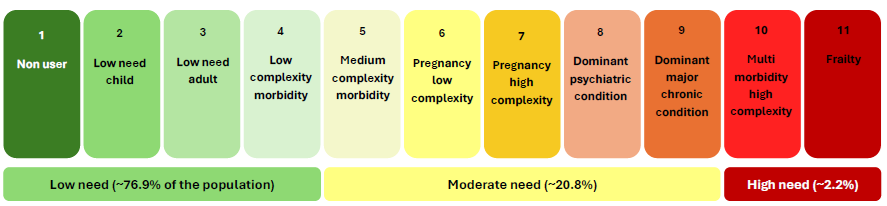
The Johns Hopkins patient need group score shown on your record is part of a national NHS programme. It helps GP practices understand what level of care patients may need.
Giving patients a group helps make sure:
• the right patient is seen
• by the right clinician
• at the right time
Instead of focusing on one medical condition, the system groups patients based on how complex their overall healthcare needs are.
Your group is automatically calculated using information already in your medical record, such as:
• health conditions
• test results
• prescriptions
• recent hospital or GP care
This group:
• is not a diagnosis
• does not change your access to treatment
• is only used to help the NHS plan services better
Your group may change only if your health changes significantly, for example:
• you develop a new long-term condition
• an existing condition becomes better or worse
• your overall health improves or declines
Please don’t worry about the group you are in, as it is calculated using a standard national system that is applied consistently to everyone. This does mean we are unable to change the group on your record.
Importantly, whatever group you are in, it will not affect the care you receive from us.